Roland Garros Brackets and Clay Court Fundamentals
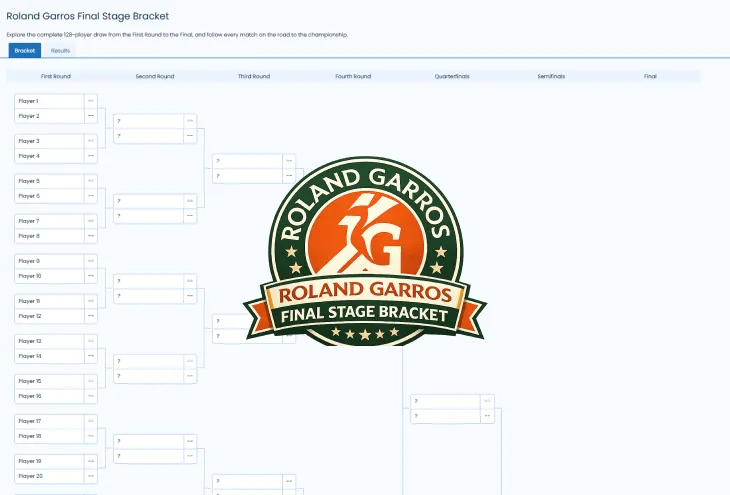
Roland Garros 2026 takes place from May 24 to June 7 in Paris, France, making it the second major of the tennis season. The tournament features 128 players in both men's and women's singles draws competing on slow red clay courts. This surface fundamentally changes how tennis plays compared to the Australian Open or other hard court events.
Clay courts slow down ball speed and create high bounces that extend rallies significantly. Points on clay average twice as long as those on grass or hard courts. Players need exceptional stamina, footwork, and patience to succeed at Roland Garros. The surface also allows sliding movements that help players reach wide shots but require special technique to master.
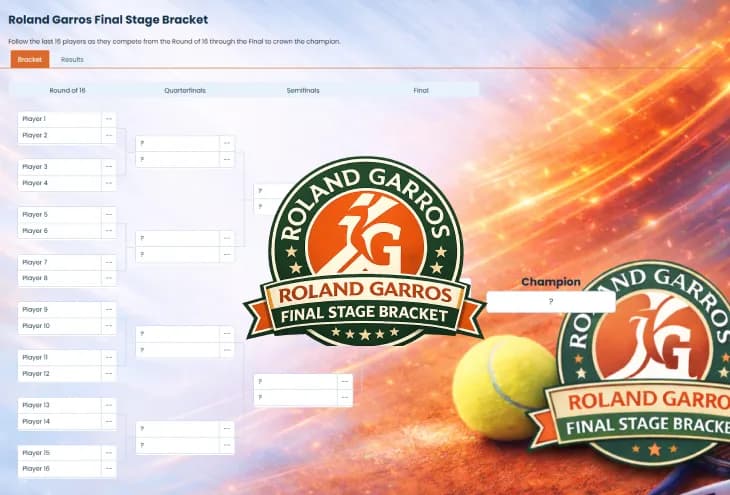
Roland Garros brackets follow standard Grand Slam seeding with the top 32 players placed strategically throughout the draw. However, clay court specialists often outperform their rankings at this tournament. A player ranked 40th who excels on clay poses more danger than a top 20 player who struggles with the surface. This dynamic makes French Open brackets harder to predict than tournaments on faster surfaces.
The draw ceremony happens just days before competition begins, revealing potential matchups through all seven rounds. Analyzing Roland Garros brackets requires checking clay court records rather than overall rankings. Past performance at the French Open and other clay events provides better prediction data than results from hard court tournaments.
Clay Court Specialists and Surface Strategy
Certain playing styles thrive on clay while others struggle regardless of talent level. Roland Garros brackets reward athletes with specific physical and tactical attributes suited to slow surface tennis. Identifying these characteristics helps predict which players advance deep into the tournament.
Baseline consistency matters more on clay than any other surface. Players must construct points carefully over multiple shots rather than relying on quick winners. Athletes who can hit heavy topspin groundstrokes and move opponents around the court excel at Roland Garros. Defensive skills also gain importance because points rarely end on single shots.
Big servers lose much of their advantage on clay courts. The slower surface gives returners more time to reach serves and neutralize power. French Open brackets often feature upsets where strong servers fall to consistent baseliners. Service games become harder to hold compared to grass or hard courts, leading to more breaks and longer matches.
Physical endurance separates contenders from pretenders at Roland Garros. Matches routinely last four or five hours as long rallies accumulate across sets. Players who maintain intensity deep into the tournament while others tire gain crucial advantages. The physical demands of clay court tennis create opportunities for fit underdogs to upset fatigued favorites.
Mental toughness gets tested uniquely on clay because players must accept long points and delayed gratification. Impatient athletes who want quick results struggle with the grinding nature of clay court rallies. Roland Garros brackets favor competitors who stay calm during extended exchanges and don't force risky shots.
Spring Timing and Tournament Preparation
Roland Garros arrives in late May after the European clay court season provides crucial preparation opportunities. Players compete in Monte Carlo, Madrid, Rome, and other clay tournaments during April and May. Results from these events offer valuable clues for analyzing French Open brackets.
Athletes who perform well during the clay court swing typically carry that form into Roland Garros. Someone who reaches finals or semifinals in Madrid and Rome arrives in Paris with confidence and match sharpness. French Open brackets should account for recent clay court results rather than overall season performance. A player struggling all year might suddenly click on clay courts.
The spring timing means players arrive relatively fresh compared to the US Open later in the season. Bodies haven't accumulated as much wear from a full year of competition. This freshness allows more players to compete at peak level, increasing the unpredictability of Roland Garros brackets. The quality depth at the French Open often exceeds other majors.
Weather conditions in Paris during late May provide comfortable temperatures without the extreme heat of Melbourne. Players face rain delays more often than other Grand Slams, but the retractable roof on Philippe Chatrier Court ensures main matches continue regardless. Cooler temperatures favor longer rallies and extended matches.
European clay court tournaments before Roland Garros create familiarity with the surface and conditions. Players who skip these preparatory events typically struggle in Paris. French Open brackets analysis must consider which athletes invested time preparing specifically for clay rather than those arriving cold from hard court tournaments.
Identifying Upsets in French Open Brackets
Roland Garros produces more upsets than any other Grand Slam because the surface neutralizes some advantages that top players enjoy elsewhere. Finding potential surprises in French Open brackets requires looking beyond simple rankings to clay specific factors.
Check each player's clay court record from the current season and previous years. Someone with a losing record on clay will likely exit early regardless of their ranking. Conversely, lower ranked players with strong clay results become dangerous upset candidates. French Open brackets often feature mismatches where rankings don't reflect clay court ability.
Head to head records on clay reveal important matchup dynamics. Certain players consistently beat others on this surface even when rankings favor the opponent. A lower seed with favorable historical results against their draw opponent becomes an attractive upset pick. Surface specific head to head data matters more than overall career meetings.
Physical condition and recent match load influence upset potential significantly. Players who competed deep into Rome or Madrid the week before Roland Garros sometimes arrive tired. Those who rested or exited early might have fresher legs for the grueling best of five set format. French Open brackets should account for schedule demands before Paris.
Draw luck creates paths where underdogs can reach the second week by avoiding multiple top opponents early. Analyzing which quarter of the Roland Garros brackets looks weakest helps identify breakthrough candidates. A clay court specialist drawn into an easy quarter with injured or struggling seeds can make a surprise run.
Making Expert Roland Garros Predictions
Creating accurate French Open brackets predictions combines clay court form analysis, historical performance data, and current tournament conditions. The unique surface demands different evaluation methods than other Grand Slams. Building a systematic approach improves prediction accuracy.
Start by identifying proven clay court performers with strong Roland Garros history. Athletes who regularly reach the second week in Paris understand what the tournament demands physically and mentally. Past French Open results provide the single best predictor of future success. Some players peak specifically for this event while treating other majors as secondary.
Monitor the European clay court swing results closely. Players winning tournaments in Monte Carlo, Madrid, or Rome arrive in Paris with momentum and confidence. Those struggling throughout the clay season rarely turn things around immediately at Roland Garros. Current form on clay outweighs rankings and reputation when making French Open brackets predictions.
Consider playing style matchups carefully on clay courts. Defensive grinders have better odds against big hitters at Roland Garros than at other tournaments. The slow surface gives defenders time to neutralize power and extend points. French Open brackets create favorable matchups for certain styles that would struggle elsewhere.
Weather forecasts and court conditions matter less at Roland Garros than other majors. The consistent clay surface and moderate temperatures create stable playing conditions. However, rain delays can disrupt scheduling and momentum. Players who handle interruptions well gain slight advantages during wet weather stretches.
Physical conditioning reports provide crucial information for Roland Garros predictions. The demanding nature of five set clay court matches exposes any fitness limitations. Players dealing with minor injuries or fatigue issues often break down over two weeks. French Open brackets reward the fittest athletes who can maintain peak performance across seven matches.
Master French Open Brackets Through Clay Court Expertise
Roland Garros brackets reward deep understanding of clay court tennis more than any other Grand Slam tournament. Start analyzing the European clay court swing today to identify players peaking on the red dirt before Paris. When French Open brackets release, focus on clay specific statistics rather than overall rankings.
Study head to head records on clay courts and evaluate physical conditioning after the spring tournament schedule. Your predictions will dramatically improve by recognizing that Roland Garros demands unique skills and preparation compared to hard court or grass tournaments. Build your French Open brackets expertise now and enjoy making confident picks when the tournament arrives.