Understanding Prediction Bracket Scoring Systems
Standard scoring awards points based on round with exponential growth. The classic 1-2-4-8-16-32 system gives 1 point for each correct first-round pick, 2 points for second round, 4 for Sweet Sixteen, 8 for Elite Eight, 16 for Final Four, and 32 for correctly predicting the champion. With 63 total games in a 64-team tournament, maximum possible points equal 192 (32+16+16+8+8+8+8+4+4+4+4+4+4+4+4+2+2+2+2+2+2+2+2+2+2+2+2+2+2+2+2+1 for each first-round game). This structure emphasizes late-round accuracy.
Upset bonus scoring adds extra points for correctly predicting lower seeds defeating higher seeds, with bonuses scaling to upset magnitude. Correctly picking a 12 seed to beat a 5 seed might earn 2 bonus points beyond standard round points, while a 15 seed beating a 2 seed could earn 10 bonus points. This system rewards participants who successfully identify specific upsets rather than just picking favorites, adding analytical depth and differentiating brackets in large pools where many participants predict similar outcomes.
Confidence pools require participants to rank their conviction in each pick, assigning point values (1 through 63 in a 64-team tournament) to games based on how certain they feel. Your most confident pick receives 63 points if correct, your second-most confident gets 62 points, and so on. This format demands strategic allocation: do you assign high confidence to "safe" picks like 1 seeds advancing, or to specific upsets you believe in strongly? Using a prediction bracket generator helps visualize confidence allocation strategies before finalizing assignments.
Strategy for Winning Prediction Bracket Pools
Successful bracket strategy balances statistical analysis with contrarian thinking. In pools with many participants, picking all favorites typically fails because even if you're accurate, dozens of others made identical picks. You need unique correct predictions to differentiate your bracket. This creates a strategic tension: favor favorites for accuracy, or pick calculated upsets for differentiation. The optimal approach depends on pool size and scoring system.
Historical upset patterns provide valuable guidance. In March Madness, roughly 35-40% of 12 seeds defeat 5 seeds, making these attractive upset picks. At least one double-digit seed typically reaches the Sweet Sixteen annually. The 8 vs 9 matchup is essentially a toss-up with near 50/50 historical splits. Meanwhile, 1 seeds have lost to 16 seeds only twice ever, making these extremely safe picks despite the allure of predicting historic upsets. Applying these statistical patterns helps identify high-probability upset opportunities.
Pool size dramatically affects optimal strategy. In a 10-person office pool, picking mostly favorites with 1-2 calculated upsets often wins. In a 1,000-person online pool, you need multiple correct upset picks that others missed to climb the leaderboard. Larger pools also justify riskier Final Four and championship picks. Selecting a 4 seed to win it all might seem crazy in a small pool but becomes strategic differentiation in massive competitions where thousands picked the same 1 seed as champion.
Creating and Managing Prediction Bracket Pools
Establishing clear rules before bracket submission prevents disputes and ensures fair competition. Define your scoring system explicitly, including point values per round, any upset bonuses, and tiebreaker procedures. Specify the submission deadline, typically the moment before the first game begins. Clarify whether entry fees are required and how prizes will be distributed. Document all rules in writing and share them with participants before they submit brackets.
Prize structures influence participation and engagement levels. Winner-take-all formats create the largest prize but may discourage participation if odds seem impossible. Paying top 3-5 positions keeps more participants engaged longer. Prizes for worst bracket or most creative team names add humor and include more people. Some pools dedicate portions of prize money to round-by-round leaders or specific achievements like correctly picking the championship game, maintaining interest even when overall victory becomes unlikely.
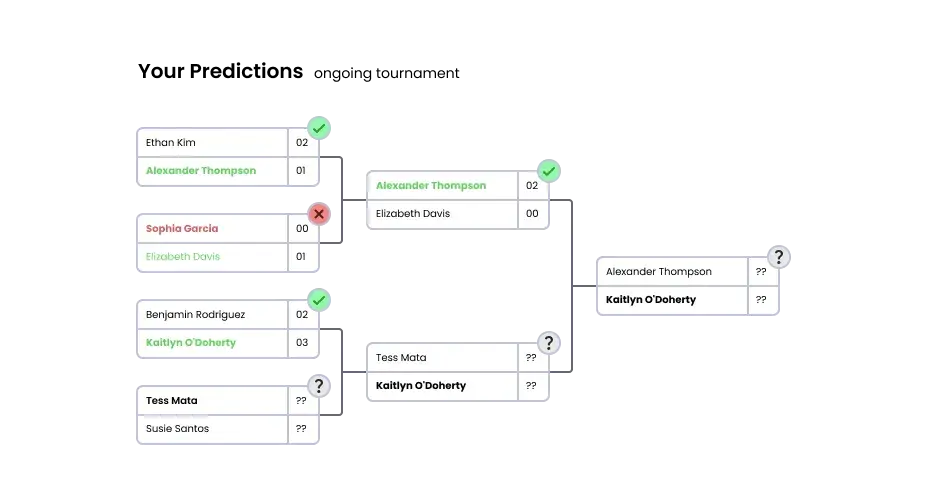
Technology platforms simplify prediction bracket administration significantly. Online bracket sites automatically score entries as games conclude, update leaderboards in real time, and eliminate manual calculation errors. Participants can check their standing instantly, see what games they need to go their way, and compare their picks against others. For traditional office environments, printable prediction brackets maintain the tactile satisfaction of filling out brackets by hand while still allowing for manual scoring and wall-posting of results.
Popular Prediction Bracket Events and Tournaments
March Madness represents the pinnacle of prediction bracket culture, with an estimated 40-60 million Americans filling out NCAA tournament brackets annually. The tournament's single-elimination format, three-week duration, and upset potential create perfect conditions for bracket competitions. Office productivity notoriously declines during the first two days when 48 games occur, as employees monitor scores and track bracket implications. The phrase "bracket busting" has entered common vocabulary specifically because of March Madness prediction pools.
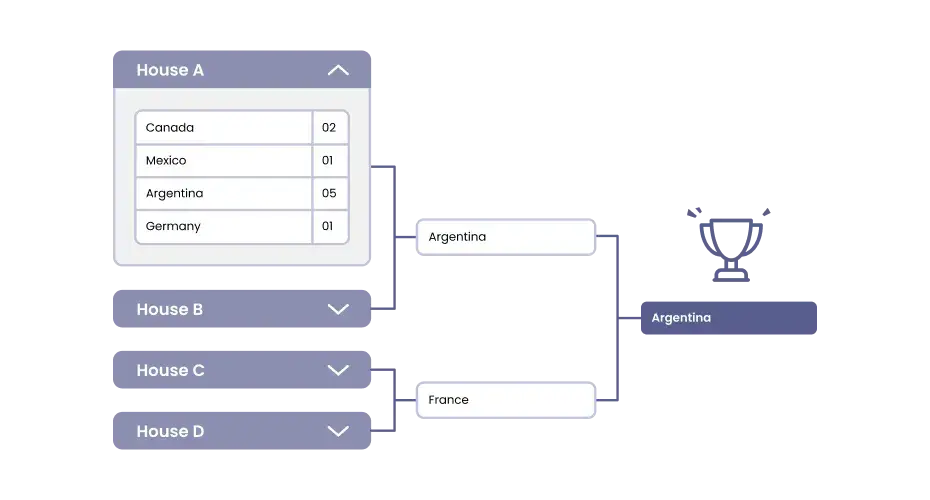
The FIFA World Cup generates massive global prediction bracket interest every four years. The tournament's month-long duration and worldwide reach create bracket pools spanning continents and time zones. World Cup brackets often use group stage predictions followed by knockout round picks, adding complexity compared to straight elimination tournaments. The international nature means participants might have detailed knowledge of their home nation but limited familiarity with other countries, creating interesting knowledge asymmetries in diverse pools.
NFL playoff brackets, NBA playoff predictions, and NHL postseason pools all maintain loyal followings, though typically with smaller participant bases than March Madness. Best-of-seven series add complexity to these predictions, requiring not just winner picks but often series length forecasts. College football playoff brackets emerged recently as the playoff expanded, while Olympic event prediction pools span multiple sports simultaneously. Any tournament with clear brackets and scheduled matchups can support prediction bracket pools.
Advanced Prediction Formats and Variations
Survivor pools eliminate participants after they accumulate a certain number of incorrect picks, typically 2-3 misses. This format maintains the prediction element while reducing the impact of single bad picks that would doom traditional all-or-nothing brackets. Survivor pools keep more participants engaged longer since early upsets don't immediately end your chances. The threshold for elimination should balance competition length with maintaining reasonable winner counts.
Round-by-round prediction pools allow participants to update picks after each round concludes based on actual results. Instead of predicting the entire tournament upfront, you only pick the next round's winners after seeing who actually advanced. This format removes the all-or-nothing pressure and allows adaptation to injuries, momentum, and revealed information. However, it sacrifices the pure predictive challenge and requires more administrative overhead to collect picks multiple times throughout the tournament.
Bracket challenges with constraints add creative wrinkles to standard prediction formats. Some pools prohibit picking 1 seeds beyond the Sweet Sixteen, forcing contrarian Final Four predictions. Others require diversity constraints like selecting at least two teams from different conferences in your Final Four. Reverse brackets challenge participants to predict the worst possible outcomes, creating humor while testing knowledge. When creating a prediction bracket for your pool, consider whether constraints would add interest for your specific participant group.
Legal and Workplace Considerations
Prediction bracket pools with entry fees and prizes occupy a legal gray area in many jurisdictions. While March Madness office pools are ubiquitous and rarely prosecuted, they technically constitute gambling in most states. Workplace policies may explicitly prohibit gambling on premises, even small-stakes pools. Large-scale commercial bracket contests with substantial prizes face stricter scrutiny and must carefully structure as skill-based competitions rather than pure gambling to comply with regulations.
Safe approaches to workplace bracket pools include eliminating entry fees entirely (making it pure competition for bragging rights), using prizes provided by the employer rather than participant money, or donating any entry fees to charity with prizes coming from separate funding. Some organizations run bracket pools through established platforms that ensure compliance with local regulations. Always consult workplace policies and consider legal implications before organizing pools, especially in regulated industries or government workplaces.
Online prediction bracket platforms have proliferated, offering both free and paid entry competitions with prizes ranging from bragging rights to millions of dollars. Major sports networks, media companies, and betting platforms run these contests, navigating legal requirements through careful structuring. Some platforms emphasize skill by requiring detailed game-by-game score predictions beyond simple winner picks, strengthening legal defensibility as skill-based competitions rather than gambling.
Psychology and Social Dynamics of Prediction Brackets
Prediction brackets create social currency through shared experience and friendly competition. Coworkers who rarely interact find common ground discussing bracket picks and upset implications. Social media sharing of bracket success or failure generates engagement and conversation. The communal watching of games transforms from passive viewing to active investment when your bracket hangs in the balance. This social element often matters more to participants than prizes, especially in office or friend group pools.
The psychology of bracket-filling reveals interesting decision-making patterns. Many participants exhibit strong recency bias, overweighting recent games and recent tournament performances while ignoring season-long data. Loyalty bias leads people to pick their alma mater or favorite team to advance further than objective analysis suggests. Contrarian bias pushes some participants to pick excessive upsets seeking differentiation, often backfiring when too many favorites actually win.
Bracket elimination creates a predictable emotional arc. Initial excitement during bracket filling gives way to intense engagement during early rounds when every game matters. Mid-tournament doldrums set in when championship hopes fade after key picks lose. Late tournament renewed interest emerges either because you're still competitive or because you've emotionally detached and can enjoy games purely as entertainment. Understanding this arc helps bracket pool organizers maintain engagement through side competitions, round-specific prizes, or social events that transcend individual bracket success.