Selecting the right tournament bracket type is crucial for creating fair, engaging competitions. Each bracket format, from traditional single-elimination knockouts to complex double-elimination structures, offers unique advantages for different competition types, participant numbers, and time constraints. Whether you need a quick 8-team playoff bracket, a comprehensive round-robin league format, or an interactive voting bracket for fan engagement, understanding how each tournament structure works helps you design competitions that keep participants motivated and spectators engaged from opening match to championship finale.
FAQ
What are the main types of tournament brackets?
The main tournament bracket types are single-elimination (one loss eliminates), double-elimination (two losses eliminate), round-robin (everyone plays everyone), group stage (groups then knockout), Swiss system (pairing-based), and ladder/pyramid (challenge-based). Single and double-elimination are most common for playoffs. Round-robin works for leagues and smaller tournaments. Group stage suits medium-to-large international competitions. Each bracket type balances fairness, time requirements, and competition goals differently.
Which bracket format is best for 8 teams?
For 8 teams, single-elimination requires just 7 matches and completes quickly (3 rounds), making it ideal for time-limited tournaments. Double-elimination gives teams a second chance with 14-15 matches across 6-7 rounds. Round-robin ensures all teams play each other (28 total matches) but requires significant scheduling. For a one-day tournament, use single-elimination. For weekend tournaments prioritizing fairness, use double-elimination. For season-long leagues, use round-robin. Most 8-team competitions choose single-elimination for its simplicity and speed.
What's the difference between single and double-elimination brackets?
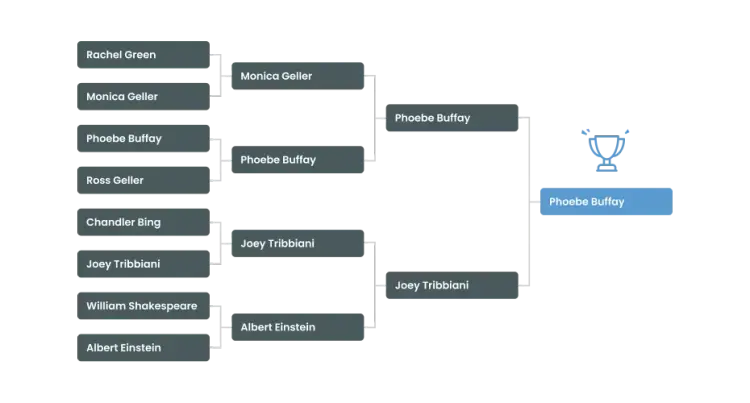
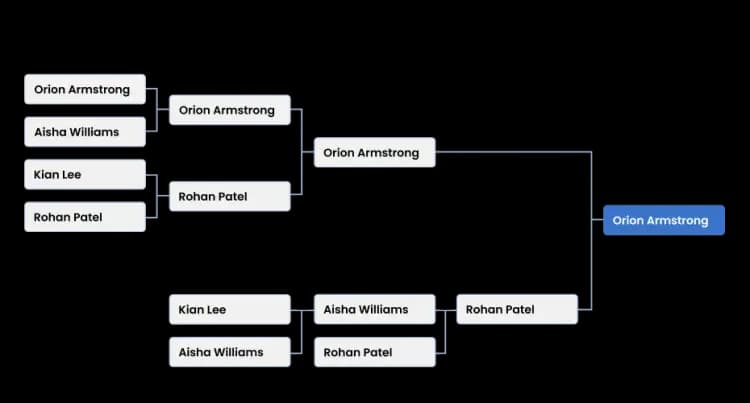
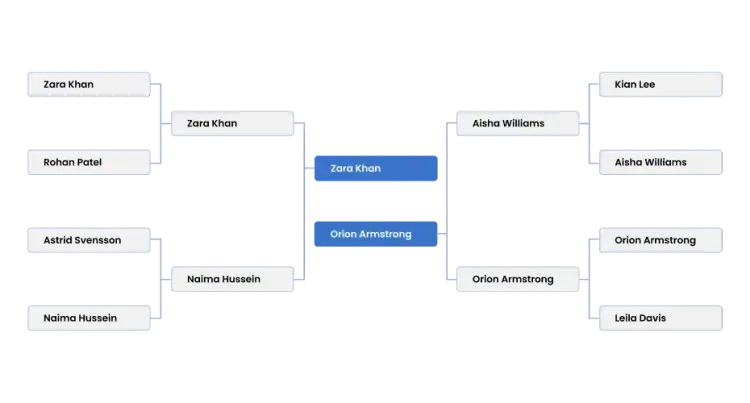
Single-elimination brackets eliminate competitors after one loss, requiring (N-1) matches for N participants. This creates fast tournaments with high stakes every match. Double-elimination brackets require two losses for elimination, featuring winners' and losers' brackets with approximately 2N-2 matches, nearly double the games. Double-elimination is fairer since one upset won't end a championship run, ensures better final rankings, and provides more total gameplay. Single-elimination is faster, simpler to organize, and creates higher tension since every match is win-or-go-home. Choose single-elimination for time efficiency, double-elimination for competitive fairness.
How does a March Madness bracket work?
March Madness brackets use single-elimination format with 68 college basketball teams. Four teams play "First Four" games to reach 64 teams, which divide into four regional brackets of 16 teams each (East, West, South, Midwest). Teams are seeded 1-16 in each region, with #1 seeds playing #16 seeds first round. Each regional bracket plays through four rounds (Round of 64, Round of 32, Sweet Sixteen, Elite Eight) to determine four regional champions. These four teams compete in the Final Four with two semifinal games and one championship game. The bracket's upset potential and seeding structure make it perfect for prediction contests.
When should I use a round-robin bracket?
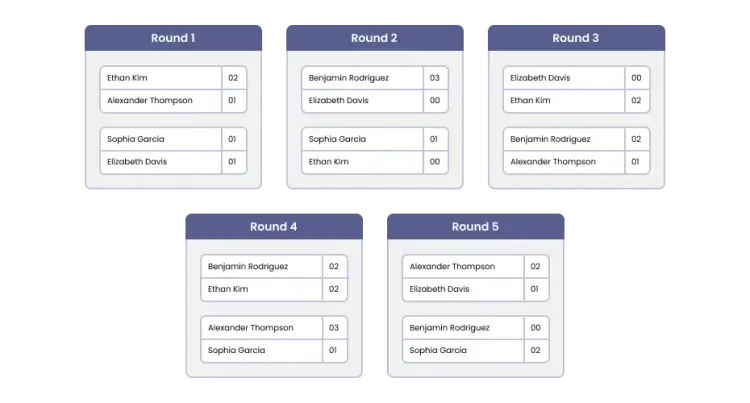
Use round-robin brackets when you have 4-12 participants (manageable match count), time allows for N×(N-1)/2 matches, fairness is more important than speed, you need to rank all participants (not just find a winner), you want to eliminate luck from single-match upsets, or you're running a league season rather than a tournament. Round-robin works perfectly for small group stages, league regular seasons, qualifier tournaments determining multiple advancers, or competitions where everyone deserves equal play time. Avoid round-robin for 16+ participants (too many matches) or single-day tournaments (insufficient time).
What is a group stage bracket used for?
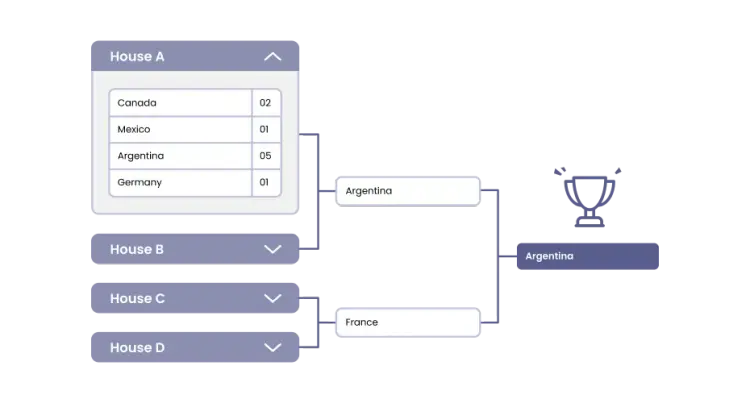
Group stage brackets efficiently handle 16-64 participants by dividing them into groups of 4-8 teams each. Within groups, teams play round-robin to determine group rankings. Top performers (usually top 2 from each group) advance to single-elimination knockout rounds while others are eliminated. This format balances round-robin fairness (multiple matches to prove ability) with knockout excitement (sudden-death playoffs). FIFA World Cup (32 teams, 8 groups), UEFA Champions League (32 teams, 8 groups), and Olympic basketball all use group stages. This bracket type suits international tournaments, large multi-team competitions, and situations where combining league and playoff formats makes sense.
Can I create prediction brackets for any tournament?
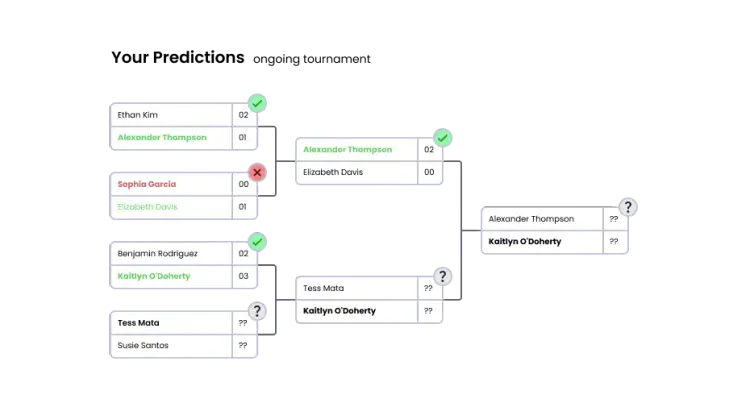
Yes, prediction brackets work with any tournament format including single-elimination, double-elimination, March Madness, World Cup, or custom brackets. Users predict match outcomes for each game before the tournament begins, earning points for correct predictions. Prediction brackets are perfect for March Madness office pools, World Cup forecasts, esports championship predictions, NFL playoff brackets, or any competition where spectator engagement matters. You can run prediction contests alongside actual tournaments without affecting real results, creating secondary competition among fans while the actual tournament determines the true champion.
How do voting brackets differ from tournament brackets?
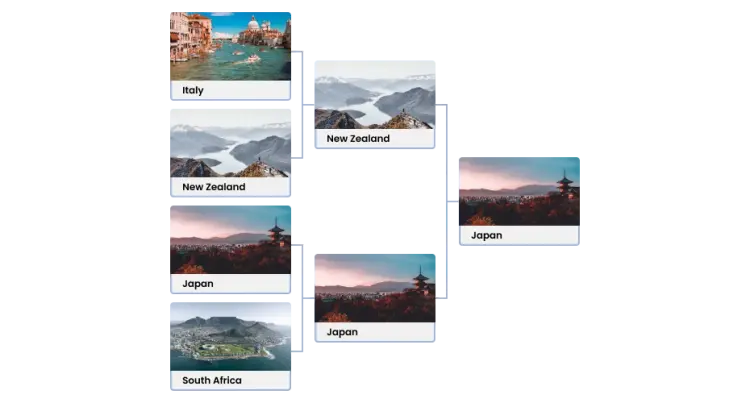
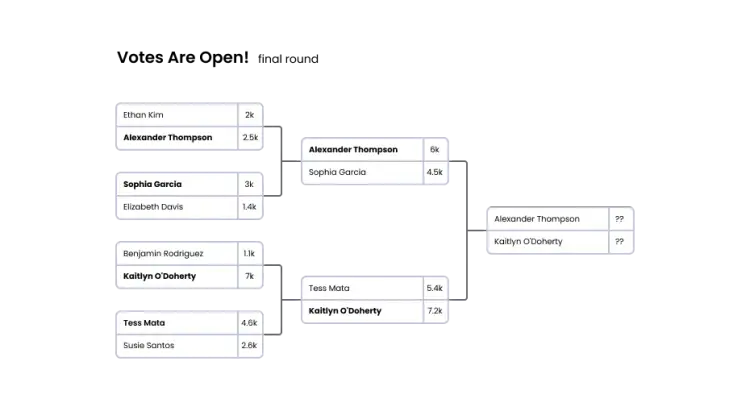
Voting brackets use bracket structure for audience-decided competitions rather than actual gameplay outcomes. Instead of teams or players competing, community members vote on each matchup with the most-voted option advancing. Voting brackets work for subjective competitions ("best movie of all time," "favorite product," "top song") where no objective winner exists. They generate viral engagement, create fan investment through voting participation, and provide market research insights about audience preferences. Traditional tournament brackets determine winners through actual competition, while voting brackets determine winners through popularity contests.