Understanding FIFA Tournament Formats
FIFA tournament brackets can use traditional knockout formats where single losses eliminate teams. Single elimination creates high-stakes drama similar to real-world cup competitions, with every match carrying elimination pressure. This format completes quickly and works perfectly for one-day events or tournaments mimicking World Cup or Champions League structures.
Double elimination brackets give players second chances after their first loss, creating fairer competition that ensures the best players reach finals. Winners' bracket advances undefeated competitors while the losers' bracket provides redemption paths. This format works well for competitive FIFA events where gameplay variance means single matches don't always reflect true skill differences.
League formats combined with playoff brackets mirror real soccer competition structures. Players compete in round robin groups where everyone faces each other, with top performers advancing to the knockout stages. This format guarantees multiple matches for every participant and creates authentic soccer tournament experiences that FIFA players appreciate and understand from watching real sports.
Setting Up eLeague Competitions
Creating FIFA tournament brackets for eLeague competitions requires planning seasonal structures and match schedules. eLeagues typically run over multiple weeks with regular season matches feeding into playoff brackets. Establish clear schedules showing when matches must be completed, giving players flexibility while maintaining tournament momentum throughout the season.
Team selection rules define competitive balance in FIFA tournaments. Some events use random team assignment, where players receive teams through draft or lottery, creating equal playing fields. Others allow player choice with tier restriction, ensuring competitive balance. Fantasy-style tournaments let players build custom squads within budget constraints, testing team-building skills alongside gameplay ability.
Registration management involves collecting player information, including gaming platform, preferred teams, and competitive rankings. FIFA tournaments are often separated by console since PlayStation and Xbox players cannot compete directly. Clear platform divisions prevent confusion and ensure all matches can actually be played between registered participants.
Managing Match Scheduling and Results
Flexible scheduling keeps FIFA tournament brackets moving without requiring all players to be online simultaneously. Set weekly deadlines for match completion rather than fixed times, allowing players to coordinate schedules directly. This approach works perfectly for eLeagues where participants have different availability but can arrange matches that fit mutual schedules.
Result reporting systems maintain bracket accuracy without constant organizer oversight. Players report match scores with screenshot proof, creating transparent records of all completed games. Discord servers with dedicated reporting channels work well for this purpose, letting players submit results and opponents verify outcomes quickly without administrative bottlenecks.
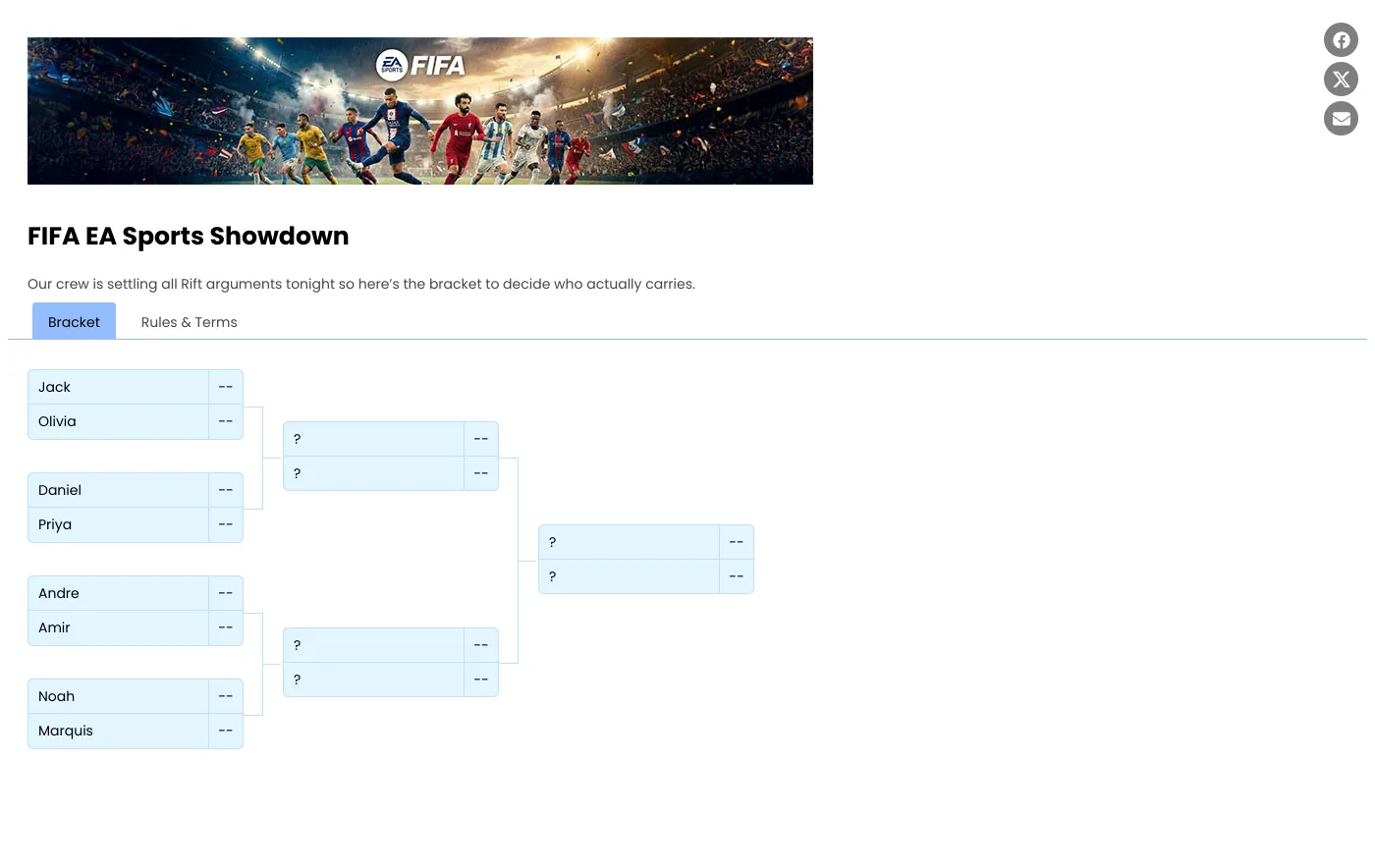
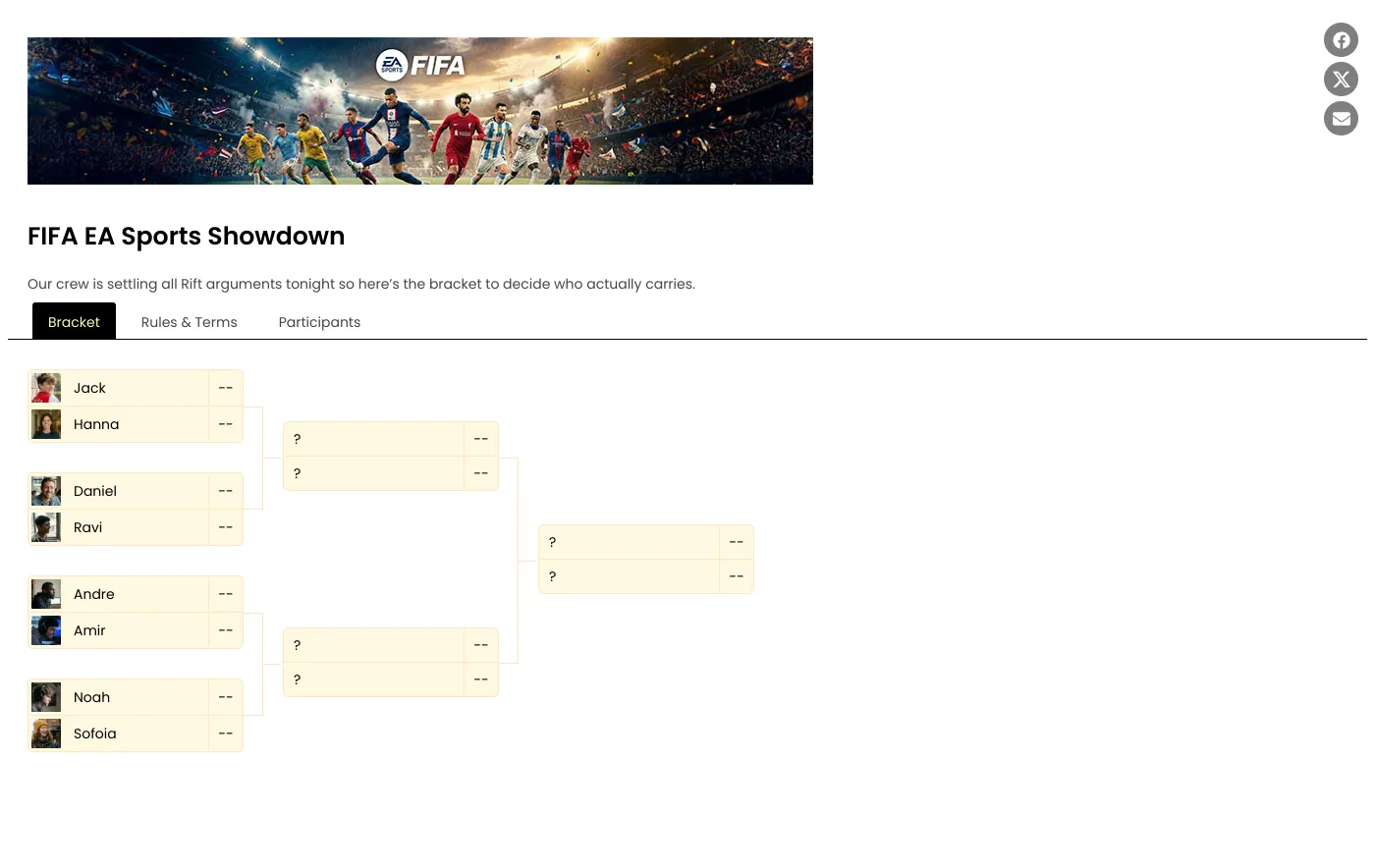
The Common Ninja Bracket Widget updates in real time as matches complete, showing current standings and upcoming fixtures clearly. Players see their next opponents and league positions immediately, maintaining engagement throughout multi-week competitions. Spectators follow tournament progression easily, tracking favorite players and predicting playoff qualifiers as seasons develop.
Rules and Competitive Standards
Standardized rulesets maintain competitive integrity across FIFA tournament brackets. Most competitive events use default game settings with specific match lengths, typically six-minute halves for standard play or longer durations for finals. Difficulty settings usually remain on default or world class, depending on competitive level, with consistent settings across all matches, ensuring fairness.
Team selection procedures vary based on tournament type. Random selection tournaments use specific methods like alphabetical order picks or random number generators for fairness. Player choice events may implement tier systems where teams are ranked, and players must choose from assigned tiers. Fantasy tournaments establish budget caps and squad-building rules that everyone follows consistently.
Disconnection policies handle network issues that inevitably occur in online FIFA matches. Most tournaments allow match restarts if disconnections happen before significant gameplay occurs, typically within the first 10 in-game minutes. Later disconnections usually result in score standing or forfeiture depending on circumstances, with clear policies preventing exploitation while accommodating legitimate technical problems.
Creating Engaging Fantasy Competitions
Fantasy-style FIFA tournament brackets let players build custom teams within budget constraints, adding strategic depth beyond pure gameplay. Establish clear budgets and player value systems before registration, ensuring everyone understands squad-building rules. Some tournaments use current player ratings, while others create custom values balancing competitive fairness with player popularity.
Draft tournaments create excitement through team-building processes visible to all participants. Snake draft formats where pick order reverses each round ensure fairness, while auction drafts let players bid on desired players within budget constraints. These formats create pre-tournament engagement as players strategize selections and react to opponents' choices.
Squad restrictions add variety to fantasy FIFA tournaments. Consider limitations like maximum players from single clubs, required player nationalities, or overall rating caps that force creative team-building. These constraints levelthe playing fields between casual and hardcore players while creating unique competitive challenges that test both team construction and gameplay skills.
Building eLeague Community Engagement
Consistent scheduling builds loyal communities around FIFA tournament brackets. Weekly match windows create regular competitive rhythms that players incorporate into schedules. Playoff periods with increased stakes and attention maintain excitement throughout seasons, with championship finals becoming major events that entire communities rally around and celebrate together.
Leaderboards and statistics keep players engaged beyond individual matches. Track seasonal records including wins, losses, goals scored, and head-to-head results. Public standings create competitive motivation and give players clear targets for playoff qualification. The Common Ninja Bracket Widget displays these standings prominently, making league positions and playoff races visible throughout seasons.
Prize structures motivate serious participation across entire seasons. Consider awards for regular season champions, playoff winners, and individual achievements like most goals or best defense. Combining team success prizes with individual awards keeps more players engaged, even if playoff qualification becomes unlikely, maintaining participation throughout full season lengths.
Growing Your FIFA Tournament Series
Multi-season planning creates sustained competitive communities around FIFA tournament brackets. Annual competitions with multiple seasons give players ongoing reasons to participate and improve. Promotion and relegation systems between skill divisions add an authentic soccer league structure, motivating performance across entire seasons rather than just individual matches.
Streaming and content creation extend tournament value beyond match results. Broadcast playoff matches with commentary, share highlight compilations from exciting games, and interview successful players about strategies. Quality content attracts new participants and keeps communities engaged between active playing periods, building tournament identity and recognition.
Partnerships with soccer-focused gaming communities or local sports bars create unique tournament atmospheres. Host viewing parties for major finals or arrange in-person events where online league participants meet and compete. These partnerships provide venues, promotional support, and crossover audiences that help FIFA tournament brackets grow beyond purely online communities.
Conclusion: Start Your FIFA Tournament Today
FIFA tournament brackets bring competitive structure to soccer gaming, whether you're organizing eLeagues, fantasy competitions, or traditional knockout events. Proper bracket systems make everything run smoother and feel more professional, regardless of format or size.
Stop using confusing spreadsheets or manual tracking that wastes time and frustrates players trying to follow standings. Modern bracket tools handle complex league formats and playoff progressions automatically, letting you focus on creating exciting, competitive experiences that soccer gaming fans crave. Build your FIFA tournament bracket now and establish your eLeague as the premier competitive destination for EA Sports FC players in your community.