Understanding Fighting Game Bracket Formats
Tekken 8 tournament brackets primarily use double elimination formats that define competitive fighting game events. This structure gives players two chances, with a winners' bracket for undefeated competitors and a losers' bracket for those who have lost once. Double elimination ensures the best players reach finals even if they have one bad match, which matters in a technical game like Tekken where single mistakes can cost entire rounds.
Single elimination brackets work for smaller weekly tournaments or side events where time constraints matter. Players face elimination after one loss, creating intense pressure and faster tournament completion. While less forgiving, single elimination fits situations where you have limited venue time or want to run quick bracket competitions alongside larger main events.
Swiss system formats provide alternatives for larger tournaments with many participants. Players face opponents with similar records each round, ensuring competitive matches throughout the event. After predetermined rounds, top performers advance to playoff brackets. This format works well for Tekken 8 tournaments, wanting to give everyone multiple matches before elimination while still crowning clear champions.
Setting Up Local Tekken Tournaments
Creating Tekken 8 tournament brackets for local events starts with venue selection and equipment planning. Secure locations with stable power, adequate seating, and space for multiple gaming setups. Fighting game tournaments need fewer setups than team-based games since matches are one-on-one, but plan at least one setup per 10-12 players for smooth progression.
Registration processes should collect player tags, main characters, and skill rankings during check-in. Many Tekken tournaments separate players into amateur and advanced brackets based on competitive experience or game rank. This separation creates fairer competition where newer players aren't immediately eliminated by tournament veterans, while still providing high-level brackets for serious competitors.
Seeding Tekken 8 tournament brackets prevents top players from meeting in early rounds. Use regional rankings, previous tournament results, or online ranked mode positions to determine initial bracket placement. Proper seeding creates better matches throughout the tournament and ensures finals feature the strongest competitors rather than having them eliminate each other in quarterfinals.
Managing Match Flow and Timing
Efficient match calling keeps Tekken 8 tournament brackets moving at the brisk pace fighting game events require. Announce upcoming matches clearly so players can prepare and move to available setups immediately. At local venues, use PA systems or digital displays showing the next matches. Online tournaments benefit from Discord bots that automatically notify players when their matches are ready.
Round formats affect tournament length and competitive depth significantly. Early bracket stages typically use best-of-three rounds to maintain pace, while top-8 or finals switch to best-of-five for more thorough competition. Grand finals often implement bracket reset rules where the losers' bracket finalist must win two full sets to claim the championship, ensuring the winners' bracket advantage matters.
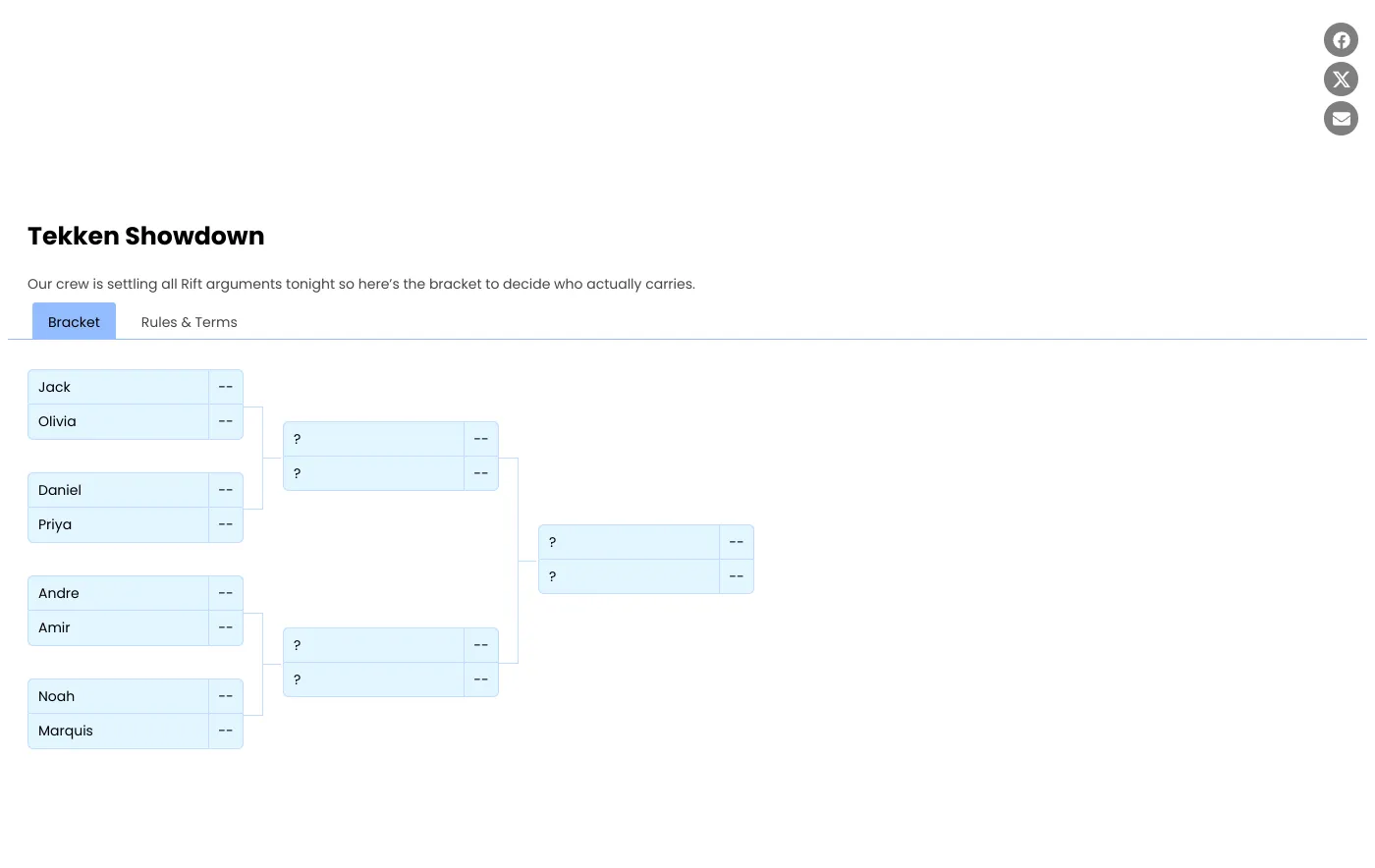
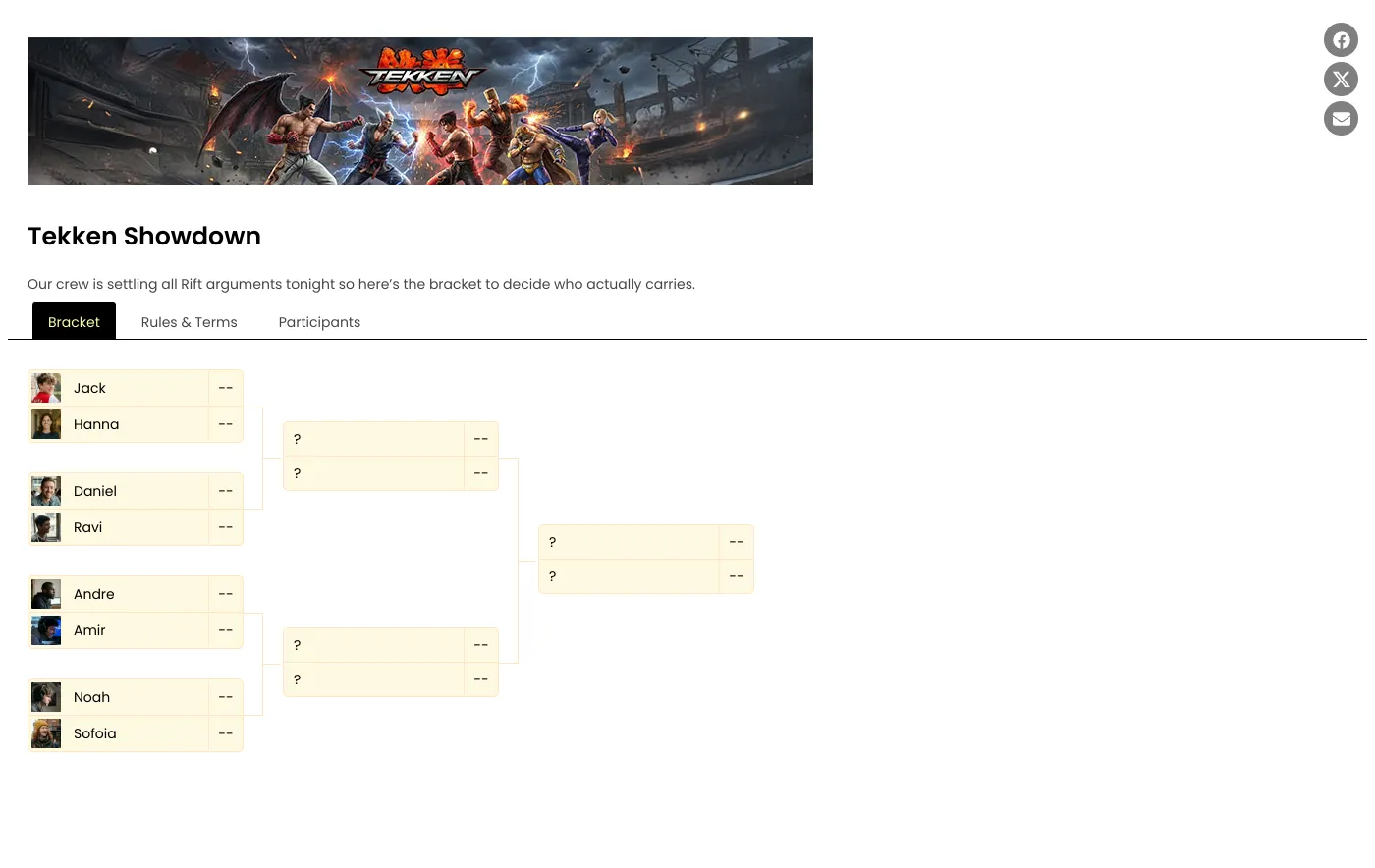
The Common Ninja Bracket Widget updates in real time as matches complete, showing players exactly where they stand and who they face next. This transparency reduces confusion and waiting time between matches. Spectators also appreciate seeing brackets fill in progressively, building anticipation for potential matchups and following storylines as underdogs advance or favorites dominate.
Rules and Competitive Standards
Standardized rulesets maintain competitive integrity in Tekken 8 tournament brackets. Most competitive events use default game settings with all characters legal and stage selection either random or agreed upon by players before matches. Unlike some fighting games, Tekken stages have minimal gameplay impact, simplifying tournament rules and reducing pre-match procedures.
Character selection rules typically allow changes between games, but not mid-set after stages are determined. Some tournaments use double-blind selection for game one, where both players secretly choose characters simultaneously, preventing counterpick advantages. These procedures ensure matches test pure skill rather than character knowledge disparities.
Dispute resolution policies handle disagreements about controller issues, game bugs, or other problems. Establish clear rules before tournaments begin, specifying how you'll address pauses, accidental button presses, or hardware malfunctions. Most Tekken tournaments allow brief pauses for legitimate technical issues but penalize deliberate disruptions or excessive delays.
Building Tournament Community and Atmosphere
Professional presentation elevates Tekken 8 tournament brackets from basic competitions to memorable community events. Display brackets prominently at venues on screens or projectors so everyone follows tournament progression easily. Visual displays help players stay engaged by watching top players advance and discussing predicted matchups with other spectators.
Streaming adds significant value even to smaller local tournaments. Basic setups capturing gameplay with bracket overlays attract online viewers and create shareable content. Commentary enhances streams dramatically, with knowledgeable commentators explaining Tekken mechanics, character strengths, and player strategies. Quality streams build your tournament's reputation and attract participants to future events.
Side events and casual setups keep communities engaged throughout tournament days. Provide stations for friendly matches, character challenges, or mini-tournaments running alongside main brackets. Fighting game events thrive when they balance serious competition with a social atmosphere where players connect, learn, and enjoy the game together beyond just bracket matches.
Online Tournament Considerations
Online Tekken 8 tournament brackets require specific adaptations for internet-based competition. Connection quality critically affects competitive fairness in fighting games where frame-perfect inputs matter. Establish requirements for wired internet connections and minimum connection speeds. Regional restrictions help ensure playable matches by limiting geographical distance between competitors.
Rollback netcode in Tekken 8 improves online play significantly compared to previous entries, making online tournaments more viable than ever. However, lag still affects competitive integrity, so consider regional divisions where players compete within their areas before inter-regional finals. This structure maximizes connection quality during most matches while still determining overall champions.
Match verification prevents disputes and false reporting in online brackets. Require players to screenshot results or save match replays as proof. Discord servers with dedicated channels for match reporting and dispute resolution keep online tournaments organized and create transparent records of all completed matches and any contested results.
Growing Your Tekken Tournament Series
Consistent scheduling builds dedicated communities around Tekken 8 tournament brackets. Weekly local events give players regular competitive practice and create traditions that strengthen fighting game scenes. Monthly major tournaments attract players from wider regions, combining local communities into larger competitive gatherings that showcase top talent and build regional rivalry.
Prize structures motivate serious competition while remaining sustainable for organizers. Entry fee pools, where participation costs fund prizes, work well for grassroots events. Consider pot bonus systems where venue sponsors or community supporters add money to player-funded pools. Even small prize pools create meaningful competition when combined with community recognition and competitive prestige.
Partnerships with local gaming venues, arcade bars, or gaming cafes provide sustainable homes for regular tournaments. These businesses benefit from increased foot traffic and community building while providing organizers with equipment, space, and sometimes promotional support. Strong venue partnerships allow tournament series to grow consistently without organizers bearing all logistical and financial burdens.
Conclusion: Start Your Tekken 8 Tournament Today
Tekken 8 tournament brackets transform casual play into an organized competition that brings fighting game communities together. Whether hosting weekly locals or planning major regional events, proper bracket systems make everything run smoother and feel more professional.
Stop using outdated paper brackets or confusing spreadsheets that slow down your tournaments and frustrate participants. Modern bracket tools handle complex double elimination formats automatically, giving you time to focus on creating great competitive experiences instead of administrative tasks. Build your Tekken 8 tournament bracket now and establish yourself as the premier tournament organizer in your fighting game community.