Understanding Group Stage Structure and Mathematics
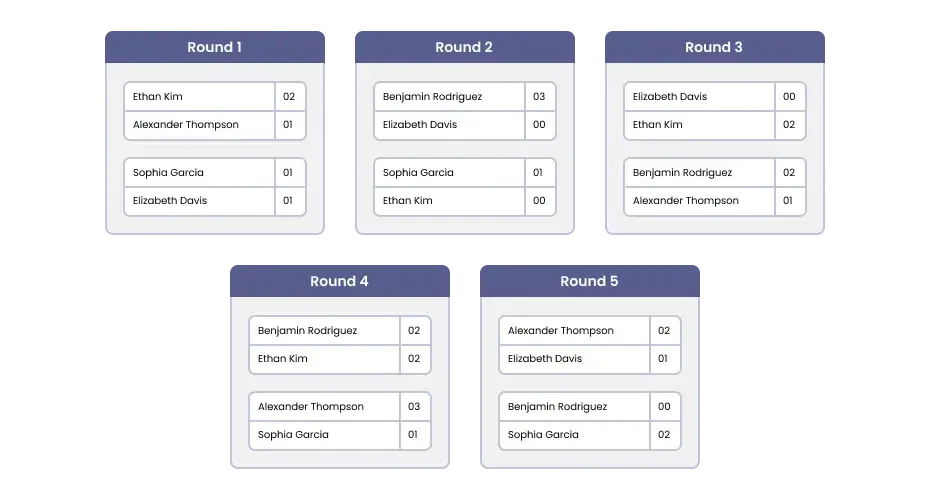
Group composition determines tournament balance and competitive fairness. The most common structure uses groups of 4 teams, each playing 3 matches in round robin format (6 total matches per group). This size provides sufficient data for rankings while keeping match counts manageable. With 16 teams in 4 groups of 4, you need 24 group stage matches. With 32 teams in 8 groups of 4, you need 48 group stage matches. These numbers remain constant regardless of how many teams advance from each group.
Alternative group sizes offer different trade-offs. Groups of 3 teams (3 matches per group) reduce total games but provide less comprehensive assessment, making luck more influential. Groups of 5 teams (10 matches per group) offer better competitive data but extend duration significantly. Groups of 6 teams (15 matches per group) are rare due to impractical match counts, typically only appearing in long-season league formats rather than tournament play.
The advancement rate from groups to knockout rounds critically affects tournament character. Advancing only group winners (4 teams from 16) creates an extremely competitive group stage where second place means elimination. Advancing top two from each group (8 teams from 16) balances group competitiveness with knockout drama. Advancing three teams from some groups (as in Euro soccer tournaments with 24 teams in 6 groups) complicates standings but allows more teams to continue. When creating a group stage bracket, clearly define advancement criteria before the tournament begins.
Seeding Groups and Preventing Groups of Death
Proper seeding prevents competitive imbalance across groups. The snake seeding method distributes strength evenly: rank all teams 1 through n, then assign teams to groups in a snaking pattern. For 16 teams in 4 groups, assign seeds 1, 8, 9, 16 to Group A, seeds 2, 7, 10, 15 to Group B, seeds 3, 6, 11, 14 to Group C, and seeds 4, 5, 12, 13 to Group D. This ensures each group contains one top seed, one middle-upper seed, one middle-lower seed, and one bottom seed.
Despite careful seeding, "groups of death" still emerge when similarly strong teams end up together, often due to regional restrictions or recent performance changes. The FIFA World Cup prevents teams from the same continent appearing in the same group (except Europe which has too many qualifiers), sometimes forcing multiple strong teams into one group while weaker teams cluster elsewhere. These constraints prioritize geographic diversity over pure competitive balance, creating controversy but serving broader tournament goals.
Some tournaments use draw pots to create groups. Divide teams into pots of equal size based on rankings or coefficients, then randomly draw one team from each pot into each group. This ensures groups are relatively balanced in aggregate while introducing randomness that prevents predictable matchups. The UEFA Champions League famously uses this system, creating drama during the draw ceremony while maintaining rough competitive parity across groups.
Group Stage Scoring Systems and Tiebreakers
The standard point system awards 3 points for wins, 1 point for draws, and 0 points for losses. This 3-1-0 system emerged in soccer to encourage attacking play by making wins worth three times as much as draws. Some tournaments use 2-1-0 (older soccer standard) or simply count wins and losses without draws in sports where ties are impossible. The system affects strategy: under 3-1-0, teams might risk losing while chasing a win, while 2-1-0 makes defending a draw more attractive.
Tiebreaker hierarchies grow complex in group stage formats because multiple teams can finish with identical points. The standard FIFA World Cup tiebreaker sequence illustrates this complexity: (1) total points, (2) goal difference in all group matches, (3) goals scored in all group matches, (4) points in head-to-head matches between tied teams, (5) goal difference in head-to-head matches, (6) goals scored in head-to-head matches, (7) fair play points (disciplinary record), (8) drawing of lots. Different tournaments modify this order based on their sport and values.
Three-way ties create particularly intricate scenarios. If Teams A, B, and C all finish with 6 points, and their head-to-head record shows each team beat one and lost to one (circular pattern), the head-to-head tiebreaker fails to separate them. You must proceed to goal difference, which might still leave teams tied. These scenarios are why comprehensive tiebreaker protocols are essential. Using a group stage bracket generator helps visualize potential tiebreaker scenarios as the group stage progresses, allowing you to understand possible advancement outcomes before the final matches.
Strategic Dynamics of Group Stage Play
Group stage strategy evolves across the three or four matches. Opening matches often feature cautious play as teams protect against early deficits that could haunt them in tiebreakers. Middle matches see teams assessing their advancement chances and adjusting ambition levels. Final group matches create the most complex strategic situations, especially when advancement is already decided or when multiple scenarios remain in play.
The simultaneous final match scheduling exists to prevent competitive manipulation. If Group A's final matches occurred at different times, the later match participants would know exactly what result they need to advance, potentially leading to pre-arranged outcomes or deliberately losing to avoid tough opponents. By scheduling all final group matches simultaneously, every team must play to win without perfect information about scenarios in other matches, maintaining competitive integrity.
Goal differential considerations add wrinkles to group stage tactics. A team trailing 1-0 late in a match already heading for elimination might concede a second goal while chasing an equalizer, damaging their goal differential without changing their advancement hopes. Conversely, a team already qualified might still compete hard in their final match to improve goal differential as a tiebreaker or to secure group winners' status and a theoretically easier knockout bracket path.
Transitioning from Group Stage to Knockout Rounds
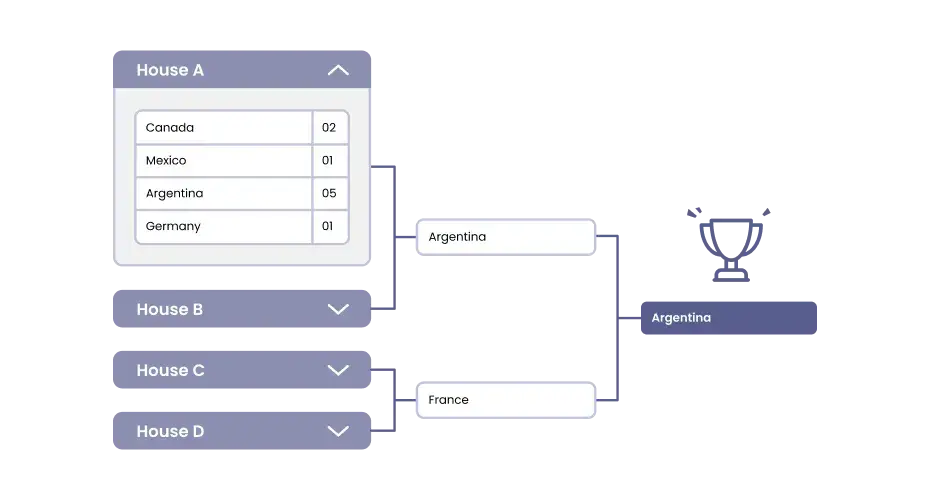
Bracket seeding from group results rewards group stage performance. The standard approach seeds group winners higher than runners-up, with the specific seeding often determined by total points, goal differential, or even a composite ranking across all groups. In a 16-team tournament with 4 groups, the four group winners might occupy the 1-4 seeds while the four runners-up take seeds 5-8, creating an elimination bracket where all first-round knockout matches pit a group winner against a runner-up from a different group.
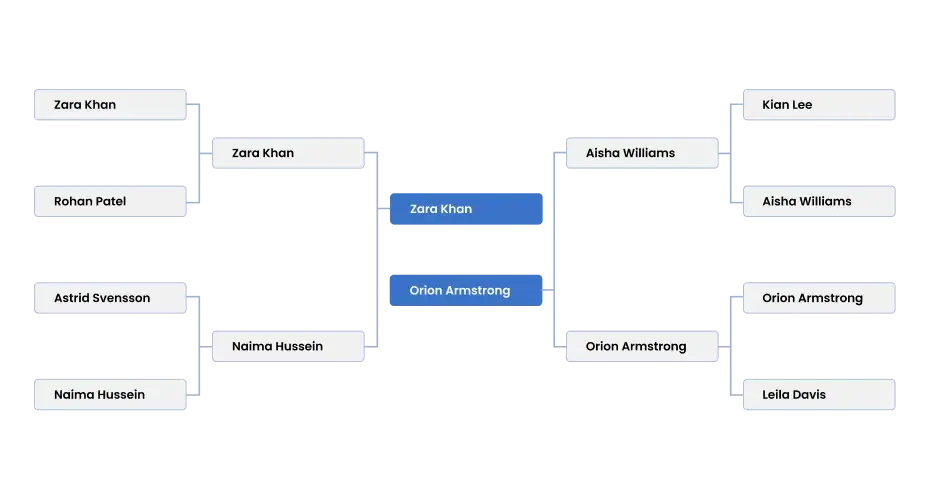
Cross-group bracket construction prevents immediate rematches while maintaining competitive balance. The winner of Group A faces the runner-up of Group B, winner of Group B faces runner-up of Group A, winner of Group C faces runner-up of Group D, and winner of Group D faces runner-up of Group C. This crossing ensures teams from the same group can only meet in the finals (in a 4-group tournament) or semifinals (in an 8-group tournament), adding variety to knockout matches.
Some formats use more complex bracket qualification. The UEFA European Championship with 24 teams in 6 groups advances the top two teams from each group (12 teams) plus the four best third-place teams. Ranking third-place teams across different groups requires careful tiebreaker application since they haven't all played each other. This system increases the number of teams reaching the knockout stage while maintaining group competitiveness, though it complicates advancement scenarios significantly.
Variations and Hybrid Models
Double round robin group stages have each team play every other group opponent twice (home and away), common in long-season league formats but rare in tournament settings due to doubled match counts. A group of 4 teams playing double round robin requires 12 matches instead of 6, feasible only for extended competitions. Some prestigious tournaments like Copa Libertadores use this format for group stages spread across several months.
The Swiss system offers an alternative to traditional group stages for very large fields. Instead of fixed groups, participants are paired each round based on similar records, ensuring you face opponents of comparable performance level. After 5-7 rounds, top performers advance to knockout brackets. This format appears in chess tournaments and increasingly in esports, handling 64+ participants more efficiently than traditional groups while providing more competitive balance than random group assignment.
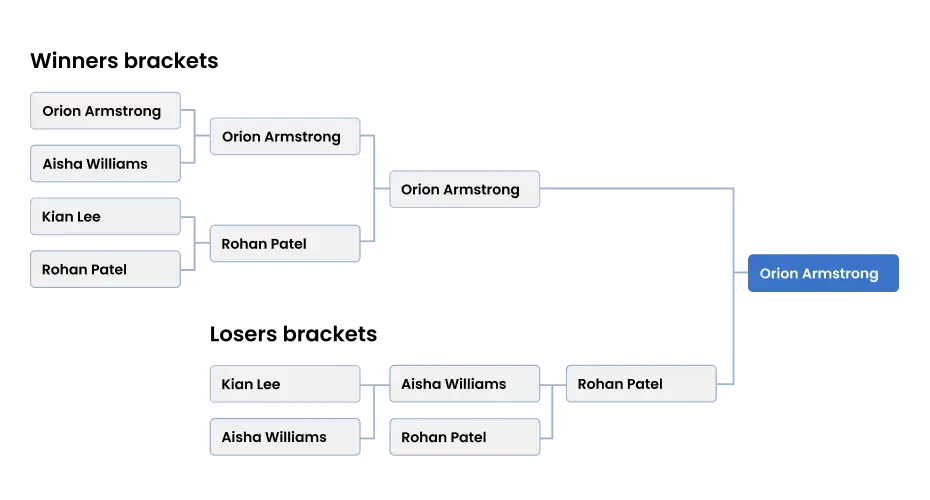
Straight knockout with consolation rounds modifies the pure elimination format by adding a group stage element. Losers from the main bracket drop into a consolation bracket where they continue competing for final placement. While not a true group stage format, it shares the philosophy of providing multiple matches and comprehensive rankings. This hybrid works well for smaller tournaments (8-16 teams) wanting multiple-match benefits without full round robin or group stage complexity.
Practical Implementation for Tournament Organizers
Scheduling group stage matches requires balancing simultaneous matches with venue availability. For a 16-team, 4-group tournament, you could run all groups simultaneously (4 matches at once) finishing the group stage in 3 rounds, or run 2 groups at a time (2 matches at once) extending to 6 rounds. The choice depends on available facilities and whether spreading matches over more time improves participant experience or creates scheduling challenges.
Rest period equity matters in group stage design. If possible, ensure all teams in a group have similar rest between matches. Avoid scenarios where Team A plays on Monday and Wednesday while Team B plays on Tuesday and Thursday in the same group, creating unequal recovery time before their mutual match. Professional tournaments meticulously schedule to provide identical rest, while amateur events with tighter timeframes might accept some inequality as necessary.
Technology integration streamlines group stage management significantly. Automated standing calculations handle complex tiebreakers instantly as matches conclude. Live updates show all participants their current advancement status and possible scenarios. Digital group stage templates can simulate various final-match outcomes, helping organizers and participants understand what results are needed for advancement. This real-time information transparency improves participant experience and reduces confusion about advancement criteria.