Understanding Round Robin Mathematics and Scheduling
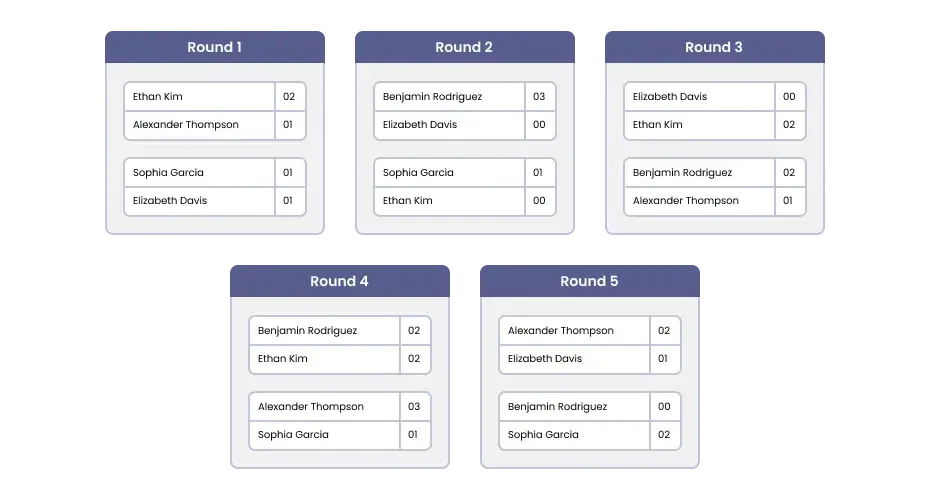
The mathematical foundation of round robin tournaments reveals why they scale poorly but deliver superior competitive data. The formula for total matches, n(n-1)/2, demonstrates exponential growth. A 6-team round robin needs only 15 matches, manageable in an afternoon. A 10-team round robin requires 45 matches, stretching into a full day or multi-day event. A 16-team round robin demands 120 matches, typically impossible without week-long scheduling. This mathematical reality explains why large tournaments use elimination brackets while smaller competitions embrace round robin's comprehensive approach.
Efficient scheduling algorithms maximize the use of available time and facilities. The berger tables method provides optimal round robin schedules that balance matches across rounds and minimize rest period inequities. For even-numbered participant groups, competitors can be arranged so that in each round, exactly half are playing while the other half rests, allowing perfect use of available courts or fields. For odd numbers, one participant receives a bye each round while others compete.
When creating a round robin bracket, consider whether you need simultaneous or sequential scheduling. Simultaneous scheduling runs all possible matches at once in each round, minimizing total tournament time but requiring multiple playing surfaces. Sequential scheduling uses a single court or field with matches played one after another, extending duration but reducing venue requirements. Hybrid approaches are common, running 2-3 matches simultaneously to balance time efficiency with facility availability.
Standings Calculation and Tiebreaker Systems
Round robin standings typically use a point system to rank participants. The most common system awards 2 points for a win, 1 point for a tie (in sports allowing draws), and 0 points for a loss. Total points determine rankings, with additional criteria breaking ties. Some tournaments use simple win-loss records without points, particularly in sports where ties are impossible or extremely rare.
When multiple teams finish with identical records, tiebreaker protocols determine final rankings. The most common tiebreaker is head-to-head results between tied teams. If Team A and Team B both finish 5-2, but Team A defeated Team B in their matchup, Team A ranks higher. Additional tiebreakers include point differential (total points scored minus total points allowed), points scored, strength of schedule (combined record of opponents faced), or even coin flips for truly deadlocked situations.
The completeness of round robin data makes tiebreakers more definitive than in elimination formats. Unlike single-elimination where teams may never face each other, round robin guarantees head-to-head results exist for all potential ties. This head-to-head clarity is why round robin is preferred for league standings and seeding determination. Using a round robin bracket generator helps visualize these tiebreaker scenarios as the tournament progresses, allowing organizers to communicate standings clearly.
Pool Play and Hybrid Tournament Formats
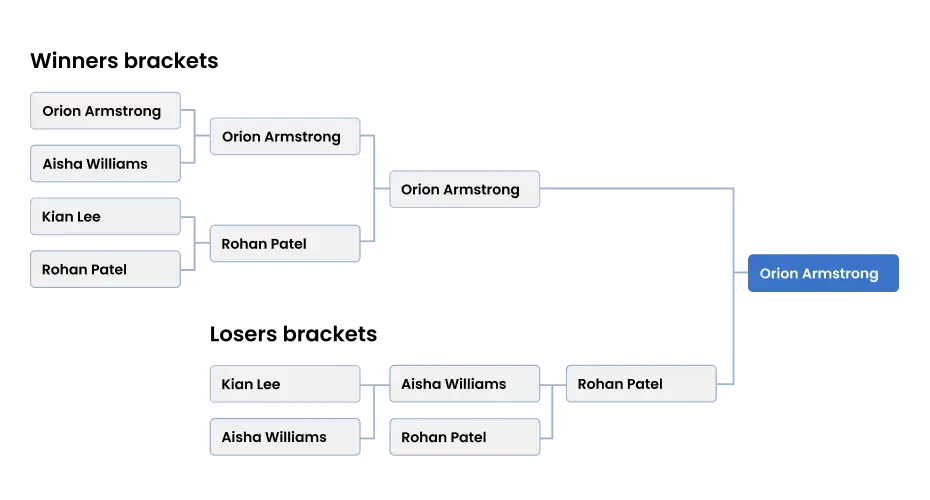
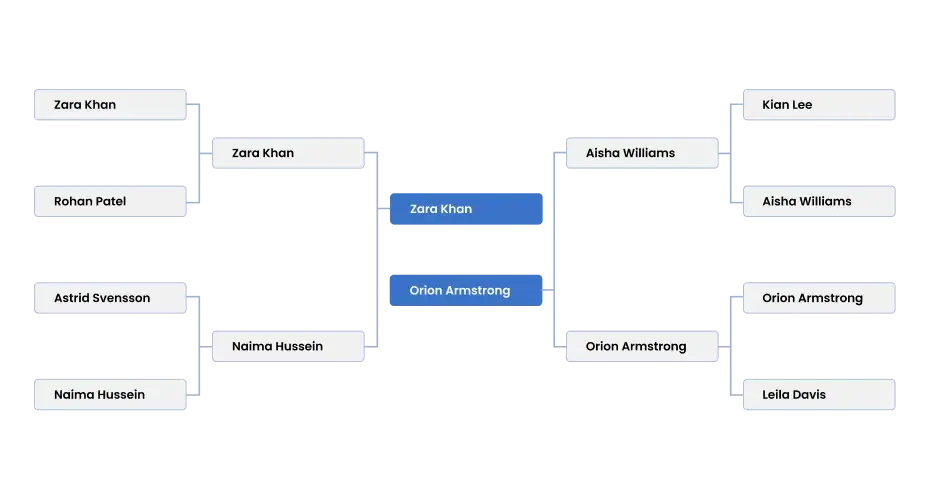
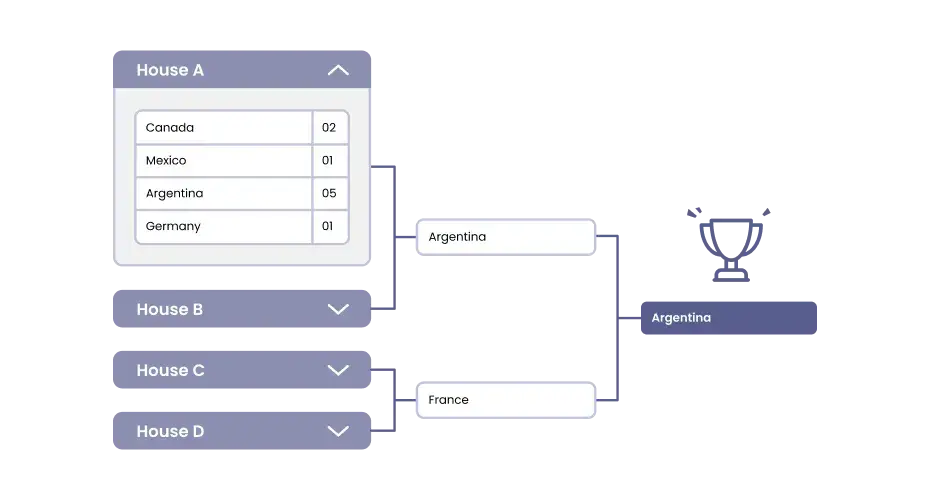
Many large tournaments combine round robin pool play with elimination brackets, leveraging the strengths of both formats. Participants are divided into smaller pools (typically 4-6 teams) that play round robin within their pool. Pool winners and high-placing teams then advance to a single or double-elimination bracket. This hybrid approach guarantees multiple matches for everyone while using elimination rounds to create championship drama and manage total match count.
Pool construction requires careful seeding to ensure competitive balance. Ideally, pools should be equally difficult, with each containing a mix of highly ranked and lower-ranked teams. Snake seeding distributes teams evenly: if you have 16 teams and 4 pools, assign seeds 1, 8, 9, and 16 to Pool A, seeds 2, 7, 10, and 15 to Pool B, and so on. This prevents creating a "group of death" where multiple top teams face each other in pool play.
The round robin to bracket transition offers several advancement models. Some tournaments advance only pool winners to brackets, creating a 4-team or 8-team elimination round. Others advance top two teams from each pool, doubling the bracket size. Most sophisticated is seeding the elimination bracket based on pool play results, so the best pool winner faces the worst second-place finisher, rewarding superior pool performance with easier bracket paths.
Strategic Considerations Across Multiple Matches
Round robin strategy differs fundamentally from elimination tournament tactics. In single-elimination, teams must win immediately or face elimination, encouraging conservative play and protecting against costly mistakes. Round robin allows calculated risks and experimental tactics because one loss doesn't end your tournament. Teams can use early matches to scout opponents, test different strategies, and save their best tactics for matches against highly ranked competitors.
Match pacing becomes crucial in round robin competitions. With guaranteed multiple matches, energy management matters more than in single-game scenarios. Teams playing their third match in five hours face different fatigue considerations than in elimination where they might play once per day. Smart coaches rotate players to maintain freshness, adjust intensity based on opponent strength, and prioritize must-win matches over games against clearly superior or inferior competition.
Point differential considerations add strategic wrinkles. If wins are tied, total point differential often serves as the tiebreaker. This creates incentives beyond simple winning or losing. A team that has already secured their standing might still play aggressively to improve point differential and strengthen tiebreaker position. Conversely, teams mathematically eliminated might still affect other teams' fates through their remaining matches, creating "kingmaker" scenarios where strategic effort decisions impact final standings.
Variations and Alternative Round Robin Formats
Modified round robin addresses some traditional format limitations. Swiss system tournaments use round robin principles but don't require every participant to face every other. After each round, pairings match competitors with similar records, ensuring you face opponents of comparable strength. Chess tournaments frequently use Swiss system for large participant pools, providing better competitive balance than pure round robin while requiring fewer matches.
The double round robin format, common in professional soccer leagues, has each team play every other team twice: once at home and once away. This 2n(n-1) match count doubles the total games but provides more complete data and balances home-field advantages. European soccer leagues, MLB, NBA, and NHL all use variations of double round robin for their regular seasons, accepting the extensive schedule because accurate season-long standings justify playoff seeding.
Partial round robin offers another compromise. Instead of requiring all possible pairings, each participant plays a set number of opponents (perhaps 5-7 matches), with opponents selected to provide competitive balance and ensure no repeated matchups. This maintains multiple-match benefits while reducing total game count. Partial round robin works well for large recreational leagues where some randomness in pairings is acceptable and completing a full round robin is impossible.
Practical Implementation for Tournament Organizers
Venue logistics for round robin require different planning than elimination brackets. You need to accommodate either simultaneous matches requiring multiple facilities or extended timelines for sequential play. Calculate total match time by multiplying individual match length by total matches, then divide by available courts or fields to determine tournament duration. Build in buffer time for delays, meals, and rest periods when creating your schedule.
Technology significantly eases round robin administration. Automated scheduling software generates optimal match rotations, preventing errors in manual scheduling. Live scoring platforms update standings in real-time as matches conclude, immediately showing participants their current ranking and remaining opponents. Digital round robin templates handle complex tiebreaker calculations automatically, saving organizers from manual math and reducing disputes over final placements.
Communication clarity prevents confusion in round robin events. Publish the complete match schedule before the tournament starts so participants know all their opponents and match times. Display live standings prominently and update them immediately after each match. Clearly explain tiebreaker procedures upfront so teams understand what they're competing for beyond simple win-loss records. For multi-day round robins, provide daily summaries showing completed matches, upcoming matchups, and current standings.